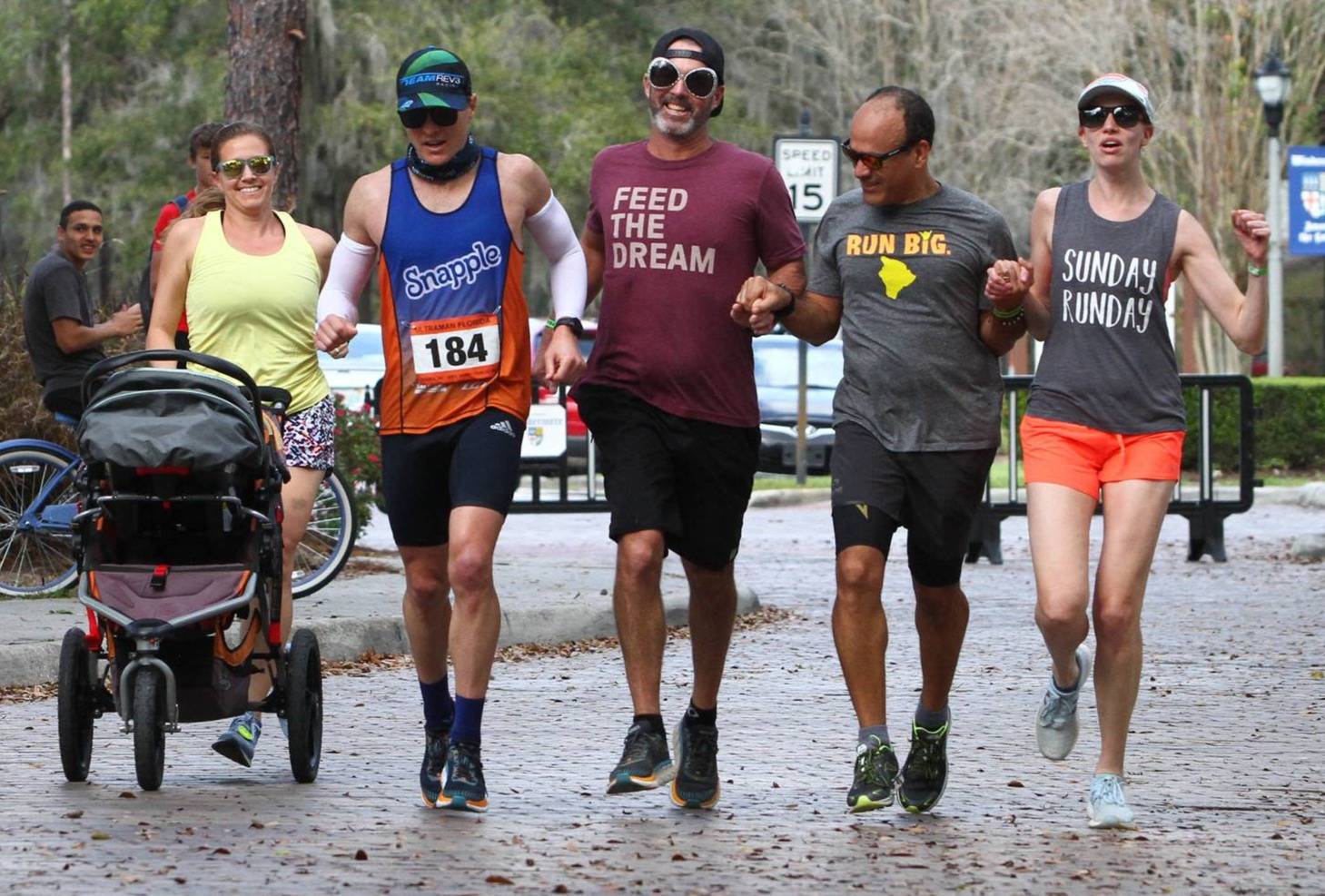
The Real Difference in Ultras
|
|
|
“What do you need?” is the most powerful question you’ll hear all day.
|
Hope you had a great holiday and you’re stepping into the new year with a full cup (reusable, of course 😉). Whether you’re coming off a big race, building toward your next one, or just trying to find your rhythm again, I hope you’re carrying some optimism into 2026.
The other day, on a long run, I started thinking about what really separates ultras from other events.
There are obvious answers: distance, fueling, time on feet.
But the real difference is this:
Ultras don’t let you pretend you’re doing it alone.
Most of us spend weeks, months, sometimes years chasing a goal. A marathon PR. An Ironman. An Ultraman. A race that keeps showing up in your head during normal life.
You learn consistency. You show up when motivation is missing. You stack boring workouts. Your confidence ebbs and flows, but you keep moving anyway.
That grind shapes you. Anyone who has crossed a finish line has earned that.
But ultras add an ingredient you can’t avoid.
Vulnerability.
In most races, you can keep the illusion of control. You plan well, you execute well, you take full ownership. Even if things go sideways, the story stays simple: I did this.
Ultras are different.
Because at some point, the ultra asks you to trust other people with the parts you usually protect.
Your crew becomes the difference between “rough patch” and “DNF.”
They’re calories when you can’t stomach another gel.
They’re dry socks when your feet are falling apart.
They’re problem-solvers when the plan breaks at mile 62.
They’re calm when your brain is loud.
And for a self-reliant athlete, that can feel foreign.
We spend so much training time alone. Alone with our thoughts, alone with the planning, alone with the spreadsheets and the gear lists and the course breakdowns.
Then race day shows up and something changes.
The starting line is the moment you realize: I can’t do this the same way I do everything else.
You still have to move forward. You still have to make decisions. But you also have to let other people help you carry the mission.
That’s the vulnerability.
And if you let it, that vulnerability becomes an anchor.
Because the crew isn’t just “support.” They become proof that you’re not stranded out there. That you’re not solving every problem alone. That you’re allowed to receive help without losing ownership.
The transformation from start to finish can be life-changing for both sides.
Athletes learn trust. They learn to accept help without guilt. They learn to stay present and do the next right thing.
Crew members become more than spectators. They become participants in the outcome. They feel the weight of the day, and they learn what it looks like to support someone through discomfort—without trying to rescue them from it.
At the end of the day, one name shows up in the results.
But every ultra athlete knows the truth:
It was never a solo mission.
And even if you never complete an ultra, this lesson still applies.
Big goals require help. The longer the mission, the more you have to practice receiving support—not just giving effort.
Ultra athletes already know this.
Their crew lives it.
And everyone else can learn from it.
If this resonates with you, I have one favor. Send this to someone else who might relate. Athletes, send it to your crew. If you’ve been part of a crew, send it to everyone who crossed that finish together.
Happy Training!