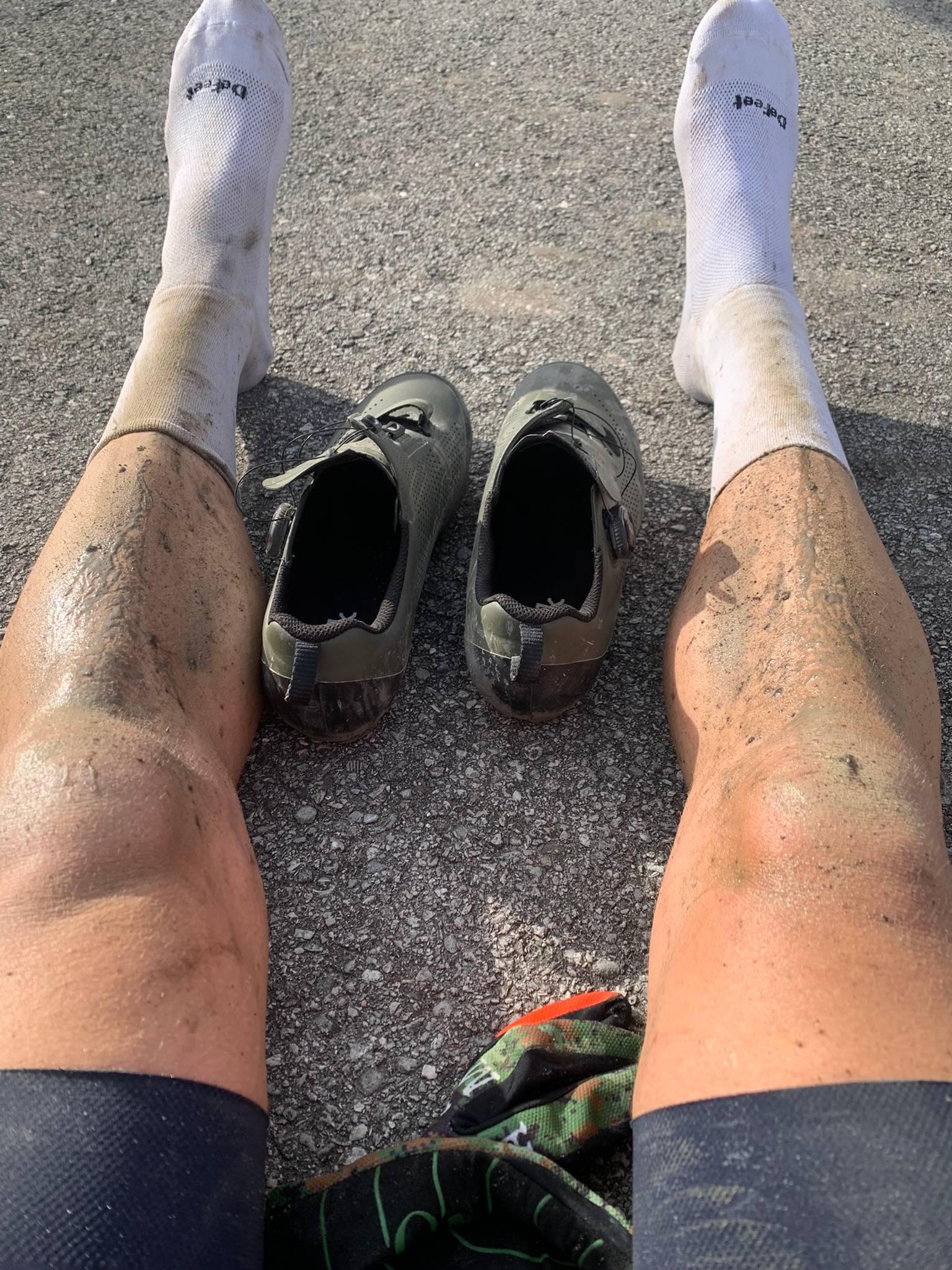
Pain & Suffering
|
|
|
No amount of mental force overcomes the pain you’re in.
|
What’s going on? Long time, no newsletter!
I sincerely apologize about the drop off. I’ve got plenty of excuses to give you, but they have all been worth it. Our Mindset Endurance athletes have been crushing their racing and training and I’ve been busy training for Cocodona 250 – less than a week!
So let’s dive into my most recent long run thoughts…
I’ve never met an endurance athlete who doesn’t have a complicated relationship with pain. We sign up for it, we train for it, and then when it shows up, we’re still somehow surprised.
And then we wonder why some people seem to handle it better than others. This isn’t just an observation of other athletes, these are some of my own thoughts.
Pain versus suffering isn’t a new concept. Smarter people than me have been writing about it for centuries.
Marcus Aurelius wrote about discomfort being neutral and that it’s our mind that assigns the meaning.
Buddhism has dukkha, the idea that pain is just part of life, and that suffering comes from resisting or clinging to it.
Modern psychology has Acceptance and Commitment Therapy, which is basically the clinical version of the same thing: stop fighting what you’re feeling and learn to move with it instead.
I’m not a philosopher or a therapist. But I’ve spent enough miles out there to know these people were onto something.
Here’s what I think happens with big races and big goals. We see the documentaries and IG reels. Athletes gritting their teeth, getting back up, running through the hurt. And we assume they feel less pain than we do. That they’re just built ‘different’.
I don’t think that’s it.
I think the difference is that they’ve learned to reframe it. They let the discomfort be there without making it the whole story. Pain shows up, they acknowledge it, and they keep moving anyway.
This is something I’m constantly working on. After some races that went sideways and a few DNFs, I realized something: no amount of mental force overpowers the pain you’re in. You can’t grit your way through it. You can’t out-tough it. The pain shows up no matter how many uphill repeats you did, no matter how much heat training you put in, no matter how perfect your training went.
What changed for me was stopping trying to fight it.
Now when the downhills start obliterating my quads, I try to just call it what it is. My legs hurt. That’s it. I don’t project it forward over the next 30 miles. My legs hurt right now. What else is true right now? My stomach feels okay. My feet aren’t terrible. The pain in my legs is one signal among many. The trick, or rather the developed skill, is making it equal to the others instead of letting it drown everything out.
So how do you actually build that?
Because it doesn’t come naturally, especially if you’re wired like me. My default is to fight fire with fire. Something hurts, let’s grit through it. But I’ve learned that the practice starts way before race day, and it starts small.
Taking the trash out when you just want to sit on the couch. Having a hard conversation with your friend/spouse/employee instead of letting it fester. Sitting down with your kids for a tough talk when avoiding it would be so much easier. Waking up early and training when you don’t want to.
These are all small moments of discomfort. None of that is painful in the way a 100-miler or Ultraman is painful. But there’s resistance there. And every time you notice that resistance, pause, and just do the thing anyway. You’re building something. Strip the emotion out of it. Ask yourself honestly: if I remove the story I’m telling about this, is it actually that bad?
Usually, it’s not.
That’s the rep. And enough of those reps, over time, changes how you handle the hard stuff when the stakes actually matter.
Thanks for taking the time to read after my long hiatus.
I’ll be putting this to the test in less than a week. We’ll see how it goes! Send me a message if you have any questions about this race or any of the other races the Mindset Endurance athletes have been completing.
Schedule a consultation call.